
Become a certified professional
Find out how to start and advance your career in open source.
Hire only certified professionals
Find out why hiring only certified professionals is good for your business.
Get your free Learning Materials!
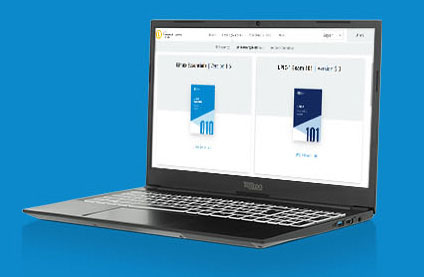
Our Learning Materials serve as preparation for our exams and are continuously expanded and updated.

"See these resources not only as instruments for professional development, but as key knowledge in a world increasingly permeated by technology."
- Luciano Siqueira, Brazil
Author and Teacher in the field of IT Training and part of the LPI’s Learning Portal Team

"Thanks to the localization process I got to learn a lot more about command line tools and I’ve even incorporated some of this new knowledge to my other jobs."
- Julia Vidile, France
Ghostwriter and Copywriter, Learning Materials Author and Translator

"Your learning is the best investment that you can ever make in your career."
- Andrew Mallett, United Kingdom
Founder of The Urban Penguin, Pluralsight Author, Learning Tree International Freelancer and part of the LPI’s Learning Portal Team
How to advance your open source career
Linux Professional Institute (LPI) is the global certification standard and career support organization for open source professionals. With more than 200,000 certification holders, it’s the world’s first and largest vendor-neutral Linux and open source certification body. LPI has certified professionals in over 180 countries, delivers exams in multiple languages, and has hundreds of training partners.

IT certifications and what they can do for you.

Find out which certification is right for you.

Check out our study and exam resources.
Get involved. Join the LPI community.

Events
Linux Professional Institute (LPI) supports Open Source Day Warsaw ’24
April 18, 2024 The 13th edition of Open Source Day is scheduled for April 18th in Warsaw – registration is now open! Open Source Day in Warsaw, the largest conference in Poland and Central-Eastern Europe dedicated to open technologies, features ... Read more

News
2024 Open Source Professionals Job Survey Report Available Now
Toronto, 04-23-2024 — Linux Professional Institute (LPI), in conjunction with Open Source JobHub, released today the 2024 Open Source Professionals Job Survey Report, which summarizes the results of a job survey among open source professionals. Based on the responses from ... Read more


Regional Support and Offices
LPI works with organizations around the world to ensure the growth and adoption of Linux, open source and Free Software. Learn more
Learn more
Preparing for Your Exam
Here you can find everything you may need to prepare for you LPI certification.
Learn more
Success Stories
Read the success stories of our certification holders and partners and learn what they have gained from Linux Professional Institute (LPI) certifications.
Learn more
Get news, event invites, and updates.
Get the latest news, tips, certification updates, event information and special community offers and surveys, delivered straight to your inbox from the Linux Professional Institute.
"*" indicates required fields
The most interesting projects in the world run on Linux.
Join the community of Linux professionals who are making incredible things happen with Linux and open source around the world.

Linux runs everywhere at SpaceX
SpaceX as a company strongly believes in making humans into multi-planetary species. A mars colony is the goal, but in order to get there you need rockets and spaceships” – Robert Rose, Lead for the avionics flight software team at SpaceX

U.S. Air Traffic Control relies on Linux
Because Linux is the most reliable when unreliability isn’t an option.

The Internet Archive runs on Linux
The Internet Archive uses hundreds of x86 servers to catalogue the internet, with all of them running Linux.

International space station ditches Windows for Linux
“We migrated key functions from Windows to Linux because we needed an operating system that was stable and reliable” – Keith Chuvala, United Space Alliance

NASA’s Curiosity Rover is remotely controlled with a Linux computer
Linux is preferred amongst scientists on earth, so it’s not surprising it’s preferred on Mars.

Hollywood runs on Linux
It’s hard to find a large studio that doesn’t rely on Linux as its primary animation and special effects OS
Thanks to our Mission Supporters for all their support.
Would you like to become a sponsor? Contact us